
Touch Grass: The Science of Time Outside
It started as an insult. The research says it's decent advice. Here's what time outside is linked to, how much you need, and how to make it stick.
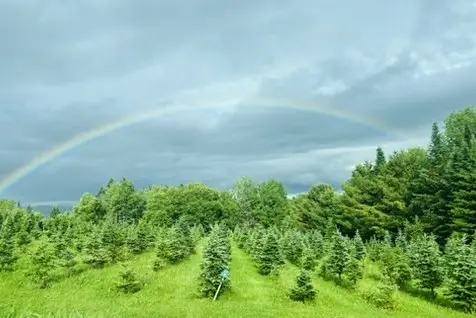
“Touch grass” started as a way to tell someone they’d been online too long. It turns out to be decent advice. The touch grass benefits that researchers have actually measured are specific: time in green space is linked to lower stress hormone levels, lower heart rate and blood pressure, less looping negative thought, and better self-reported health and wellbeing.
The dose is smaller than you’d guess. The most cited number is 120 minutes a week, which is about 17 minutes a day. This guide covers what the studies found, where they run out, and how to turn “I should get outside more” into something you do without thinking about it.
What “touch grass” means
It’s internet slang for “log off and go outside.” Mental Floss traces the phrase to gaming culture in the mid-to-late 2010s, with the term showing up on Twitter around 2015 and going fully mainstream by 2021. It can be an insult or a gentle reminder, depending on who’s saying it and how badly you needed to hear it.
Here we’re using it the gentle way. Nobody’s calling you terminally online. We’re just pointing at the door.
Touch grass benefits: what the research actually found
Four studies do most of the heavy lifting. Here’s each one, with its limits.
Your body: the big review
In 2018, two researchers pooled the evidence. Their meta-analysis in Environmental Research covered 103 observational studies and 40 interventional ones, across 20 countries and a combined population of more than 290 million people.
Greenspace exposure was associated with lower salivary cortisol (a stress hormone), lower heart rate and lower diastolic blood pressure. It was also associated with lower rates of type II diabetes, cardiovascular death and death from any cause, and with more people reporting good health.
The caveat is the authors’ own: some of those results rest on poor quality studies that disagree with each other a lot, and should be “interpreted with caution.” Read it as a strong pattern, not a settled bill of health.
Your stress: the 20-minute finding
A 2019 study in Frontiers in Psychology followed 36 people for eight weeks and measured cortisol in their saliva before and after time in nature. A nature experience was linked to a 21.3% per hour drop in cortisol, on top of the hormone’s normal daily decline. The most efficient window was 20 to 30 minutes. After that the benefit kept building, just more slowly.
That’s a small group, mostly women, who signed up for a nature study. So: promising, not proven.
Your head: the 90-minute walk
In a 2015 study from a Stanford-led team, published in PNAS, 38 healthy adults took a 90-minute walk. Half walked through grassland with oak trees. Half walked along a busy multi-lane road. The nature group reported less rumination afterward (the repetitive, negative, self-focused kind of thinking) and showed less blood flow in a brain region tied to it. The road group showed no change.
It’s one walk and 38 people. But it’s a real experiment with a comparison group, which most of this field isn’t.
Your overall health: the 120-minute study
This is the one that gives you a target. A team led by the University of Exeter analyzed survey answers from 19,806 people in England and published the results in Scientific Reports in 2019. People who spent at least 120 minutes a week in nature were more likely to report good health and high wellbeing than people who spent none.
120minutes a week
The amount of time in nature linked to better health and wellbeing. That’s about 17 minutes a day.
White et al., 2019Two details matter for real life. First, it didn’t matter how people got to 120: one long outing or several short ones. Second, the pattern held for older adults and for people with long-term health issues.
How much time outside you need
Short version: aim for 120 minutes a week, split however your week allows.
In the Exeter study, the link got stronger up to somewhere between 200 and 300 minutes a week, then flattened. That’s roughly 30 to 45 minutes a day at the top end. Under 120 minutes a week, people in that study weren’t measurably different from people who got none, although the cortisol study suggests a single 20-minute session still does something for stress in the moment.
We broke the daily math down, including what to do if you can only get out on weekends, in how much time outside per day you actually need.
What the science can’t tell you yet
It’s worth being straight about this, because a lot of “nature is medicine” content isn’t.
- Most of it is correlation. The 120-minute study is a snapshot survey. The authors say they can’t rule out that healthier, happier people simply get outside more. It probably runs both ways.
- A lot of it is self-reported. People estimated their own time outside and rated their own health.
- The experiments are small. 36 people. 38 people. Useful, but not the last word.
- Nobody has nailed the mechanism. Movement, daylight, quiet, other people, a break from the screen: outside bundles them together, and the studies mostly can’t pull them apart.
None of that is a reason to stay in. A walk is free and the downside is roughly zero. It’s a reason to be suspicious of anyone promising that a park will fix your life. Time outside is also not a treatment for anxiety or depression. If things are heavy, talk to a professional. Then, sure, take the walk too.
Does it have to be actual grass?
No. In the cortisol study, a nature experience was anywhere outside that, in the participant’s own opinion, had enough natural elements to count. Your call, basically.
One wrinkle: the 120-minute study did not count time in people’s own gardens. It measured going somewhere. That doesn’t mean your yard is useless. It means the 120-minute number specifically describes trips out to what the researchers called natural settings: town parks, woodlands, country parks and beaches.
A practical rule: if you can see something growing and you’re not looking at a screen, you’re in the right neighborhood.
You are probably inside right now
The U.S. Environmental Protection Agency says Americans spend approximately 90 percent of their time indoors. The figure it cites comes from a 1989 report to Congress, written before anyone had a phone worth staying in for.
90%of your time, indoors
The EPA’s estimate for the average American. The other 10 percent is about 2.4 hours a day.
U.S. EPATen percent of a 24-hour day is 2.4 hours, and that has to cover every parking lot, gas station and walk to the mailbox. Against that, 17 minutes a day in a park stops sounding trivial.
The hard part isn’t knowing. It’s going.
You already knew outside was good for you. Nobody needed a meta-analysis to learn that a walk beats a third hour on the couch. The gap is between knowing it and doing it on a rainy Tuesday.
What closes that gap is making it a habit with a visible record. Researchers at INSEAD and the University of Delaware ran seven experiments with more than 4,000 participants and found that people are more likely to keep doing something when their log shows an unbroken run. They also found the catch: break the run and motivation dips, unless there’s a way to repair it. The full story is in do streaks work?.
Here’s how GTFO handles it. You pick one outdoor habit: a walk, a fresh air break, a weekend hike. You get daily reminders. Every time you do it, you close a link, and the links make your habit chain. Miss a day and you’ve got 2 passes a month to cover it. Run out and miss again, and the chain resets, quietly. No red, no guilt. Milestones land at 7, 30, 100 and 365 links.
How to make touching grass a habit
A few rules that hold up, whatever you use to track it.
- Pick one thing. Not a new outdoor lifestyle. One walk. One coffee on the steps. One loop of the block after lunch.
- Attach it to something that already happens. After the school run. Before the first meeting. When the laptop closes. A habit with a fixed slot doesn’t need a decision every day.
- Make it too small to skip. The research target is about 17 minutes a day. Start at 10 if 17 sounds like a lot. You can always stay out longer. You rarely do less than you planned once you’re out the door.
- Leave the phone in your pocket. Outside has no notifications. That’s the point.
- Plan for the miss. You will get sick, travel, or have a day that eats itself. Decide in advance that one miss is a miss, not the end.
- Count it. A number you can see is more persuasive than a vague sense that you’ve been “pretty good lately.”
How big should you go?
If the small version is working and you want a bigger target, the famous one is 1000 Hours Outside, a challenge built for families where you try to spend 1000 hours outside in a 365 day period. That works out to about 2.7 hours a day, every day, which is a lot to ask of anyone with a job and a commute.
There are honest ways to scale it. We laid out the tiers, from 100 hours a year up to the full thing, in the 1000 Hours Outside challenge for adults who have jobs.
Start with this week
Don’t plan the year. Plan seven days.
- Today: go outside for 10 minutes. No goal. Just see what’s out there.
- This week: pick your slot and your one thing. Hit it four times.
- By next weekend: add one longer outing. An hour somewhere with trees gets you halfway to 120 on its own.
That’s it. Seventeen minutes a day is less time than you’ll spend deciding what to watch tonight. Not a guilt trip. Just the math.
Quick answers
- What are the benefits of touching grass?
- Studies link time in green space to lower stress hormone levels, lower heart rate and blood pressure, less rumination, and better self-reported health and wellbeing. Most of this research shows a link, not proof of cause.
- How long do you need to touch grass for it to count?
- The best-known number is 120 minutes a week, from a 2019 study of about 20,000 people in England. That is about 17 minutes a day, and it did not matter how the time was split up.
- Does it have to be actual grass?
- No. The 120-minute study counted natural settings such as town parks, woodlands and beaches, and another study let people choose anywhere outside that felt like nature to them.
- Is 20 minutes outside enough to lower stress?
- In one small 2019 study of 36 people, 20 to 30 minutes in a nature setting was the most efficient dose for lowering the stress hormone cortisol. It is one small study, so treat it as a useful hint, not a guarantee.
- Is touching grass a treatment for anxiety or depression?
- No. The research links time outside to better wellbeing, but it is not medical care. If you are struggling, talk to a doctor or a mental health professional.
Sources
- Spending at least 120 minutes a week in nature is associated with good health and wellbeingScientific Reports (full text on PubMed Central). Checked 2026-10-09.
- The health benefits of the great outdoors: A systematic review and meta-analysis of greenspace exposure and health outcomesEnvironmental Research (full text on PubMed Central). Checked 2026-10-09.
- Two hours a week is key dose of nature for health and wellbeingNeuroscience News. Checked 2026-10-09.
- Urban Nature Experiences Reduce Stress in the Context of Daily Life Based on Salivary BiomarkersFrontiers in Psychology. Checked 2026-10-09.
- Nature experience reduces rumination and subgenual prefrontal cortex activationProceedings of the National Academy of Sciences (full text on PubMed Central). Checked 2026-10-09.
- Indoor Air QualityU.S. Environmental Protection Agency. Checked 2026-10-09.
- Why Do We Tell People to "Go Touch Grass?"Mental Floss. Checked 2026-10-09.
- Consumer Streaks Are Motivating - The Key Is Keeping Them AliveINSEAD Knowledge. Checked 2026-10-09.
- 1000 Hours Outside1000 Hours Outside. Checked 2026-10-09.
GTFO is a habit app, not medical advice. If you spot an error here, email [email protected].